

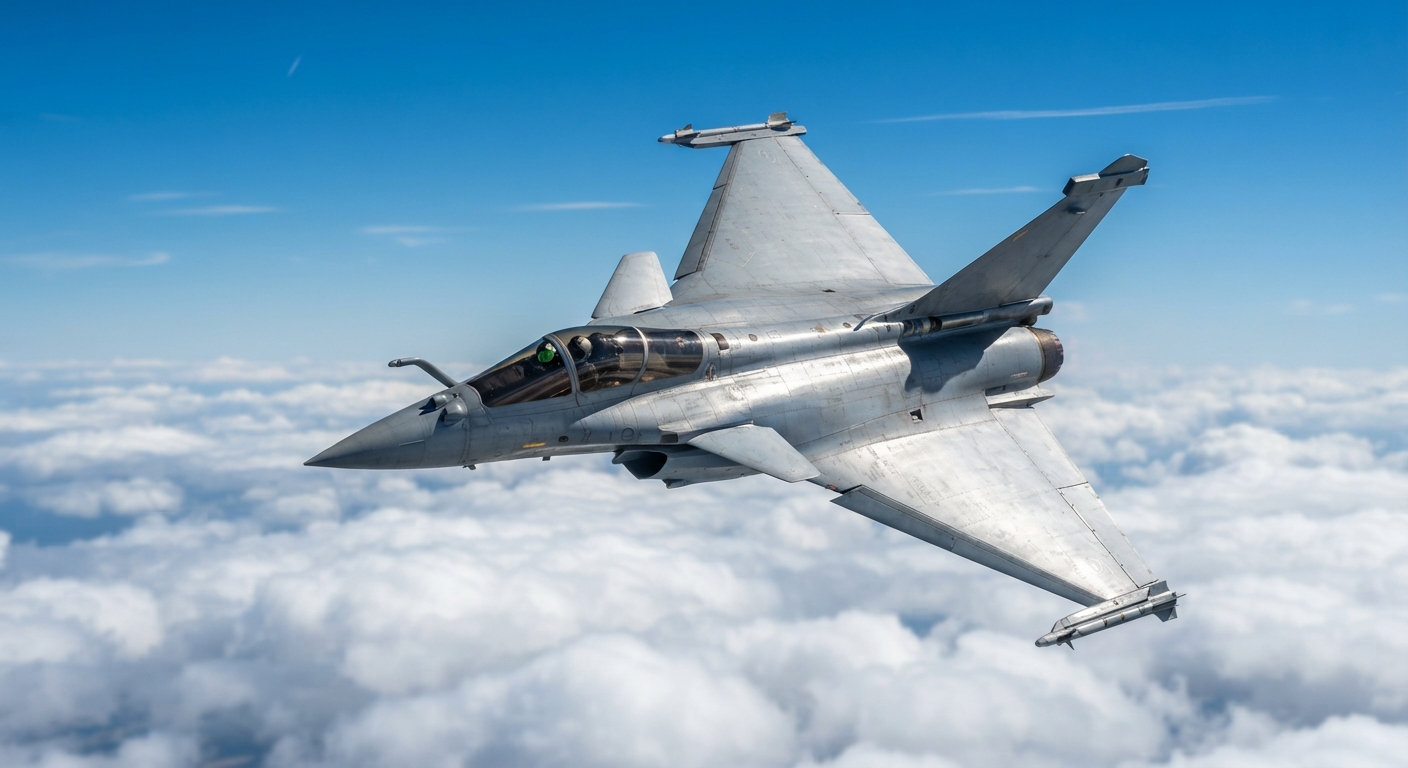
Nonlinear material, elastomer, and impact simulation for aircraft applications.
Aircraft Component Test Simulations
//Aircraft Component Test Simulations
Aircraft Component Test Simulations
//Aircraft Component Test Simulations
Project Details
High-rate impact, dynamic fracture, elastomer mechanics, and FSI simulations for aircraft structures and components – TCHIKOU-R CONSULTING, November 202601. -
Aircraft Component Test Simulations
Category:
Nonlinear Solid Mechanics & Polymers
1. Overview and Scientific Context
Commercial and defense aircraft structures, engine containment casings, and elastomeric sealing systems experience severe dynamic loads—including hail and runway debris impacts, shock wave propagation, and cyclic viscoelastic deformations.
Capturing spallation, dynamic fracture, and nonlinear rubber mechanics requires advanced numerical formulations beyond standard linear elasticity. At TCHIKOU-R CONSULTING, we combine continuum mechanics, custom constitutive modeling, and high-performance computing (HPC) to simulate extreme material responses validated against experimental reference data.
2. Core Modeling & Simulation Capabilities
Our numerical expertise directly addresses high-strain-rate physics and complex material behavior in aviation R&D:
- Foreign-Object & Hail Impact Mechanics: Simulation of shock propagation, large elasto-plastic deformations (Steinberg-Guinan, Johnson-Cook), spallation, and dynamic fracture in aircraft metals and composites using Eulerian Reference Map, Finite Volume, and Finite Element methods.
- Aviation Elastomers & Sealing Systems: Hyperelastic and multi-mode viscoelastic constitutive modeling (Giesekus, DEVSS stabilization) for airframe seals, landing gear damping elements, and vibration isolators.
- Transient Fluid-Structure Interaction (FSI): Coupled aerodynamic fluid dynamics and nonlinear solid mechanics under unsteady pressure loads and gust-induced structural deformation.
- Constitutive Model Calibration & HPC Workflows: Parameter identification against dynamic impact and rheological test data, automated Python/Gmsh meshing, and parallel MPI/PETSc execution.
3. Representative Aircraft Simulation Applications
Our computational physics capabilities apply to targeted aircraft material and component investigations:
| Aircraft Subsystem / Material | Simulated Physical Phenomena | Key Numerical Outputs |
|---|---|---|
| Leading Edges & Engine Containment | Hail and runway debris impact, shock waves, dynamic fracture | Spallation thresholds, plastic strain localization, perforation resistance |
| Airframe Seals & Landing Gear Dampers | Large hyperelastic strains, viscoelastic stress relaxation, cyclic loading | Time-dependent stiffness, hysteresis loops, deformation fields |
| Composite & Metallic Airframe Panels | High-strain-rate loading, ductile damage (GTN, Tuler-Butcher) | Damage evolution, dynamic failure onset, residual deformation |
| Control Surfaces & Fairing Interfaces | Unsteady aerodynamic pressure loads and fluid-structure coupling (FSI) | Interface pressure distribution, transient structural response |
4. Scientific & Engineering Value
By grounding simulations in rigorous continuum mechanics and experimental validation, we support aviation research and engineering teams on complex physical challenges:
- High-Fidelity Impact & Shock Physics: Eliminate spurious numerical diffusion at material interfaces using Reference Map and adaptive mesh refinement (AMR) techniques.
- Validated Constitutive Laws: Calibrate and verify nonlinear material models against experimental impact and rheological datasets.
- Scalable Scientific Computing: Execute high-resolution 3D simulations efficiently through parallel MPI architectures and automated Python pre-processing.
5. Contact
For inquiries regarding aircraft impact simulations, dynamic fracture, elastomer modeling, or custom solver development:
Dr Serge B. Ndanou, TCHIKOU-R CONSULTING – [email protected]
Explore additional simulations, scientific investigations, and computational engineering projects in our Portfolio.
