

1. Introduction
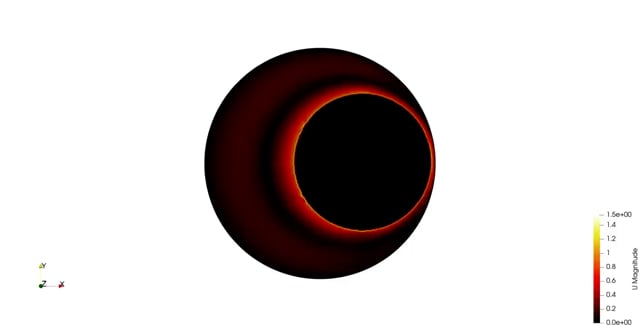
Viscoelastic fluids, ubiquitous in industrial polymers and biological systems, exhibit behaviors that defy traditional fluid dynamics. Among these, the formation and movement of a void or hole within the fluid — which persists and travels dynamically in response to internal stresses — stands out as a particularly intriguing phenomenon. It is both a compelling scientific curiosity and a powerful lens for understanding the time-dependent interplay of elasticity, viscosity, and flow in complex media. This article explores the underlying mechanics of this phenomenon, its implications, and its real-world applications — insights of direct value to researchers, developers, and engineers.
2. Foundations of Viscoelastic Behavior
Viscoelasticity arises from the molecular structure of materials — typically long-chain polymers or entangled networks — that respond to stress with both instantaneous viscous flow and delayed elastic deformation. Viscous behavior corresponds to energy dissipation, while elastic behavior relates to energy storage and recovery. These dual responses mean that under deformation, the fluid does not
behave like water or oil; it remembers past stresses, leading to time-dependent phenomena such as delayed recoil, creep, and oscillatory responses.
3. The Hole: More than a Void
In a Newtonian fluid, a hole or cavity created at the surface is rapidly erased by surface tension, as the fluid seeks to minimize its surface area. In contrast, in viscoelastic fluids:
The hole can persist for extended periods. It may oscillate, flatten, or even travel laterally across the surface.
Surface tension, internal stress gradients, elastic recoil, and nonlinear viscosity drive this behaviour.
This reveals the non-equilibrium nature of viscoelastic fluids, where the system does not immediately return to its rest state but rather evolves dynamically under stored elastic energy and complex internal
interactions.
4. Governing Physical Principles
Four mechanisms drive the hole’s dynamics — and they often pull in opposite directions.
A. Elastic Recoil and Stored Energy
As the surrounding material stretches, it stores energy like a spring. This elastic memory counteracts collapse and can create a restoring force that drives the hole in specific, often asymmetric, directions.
B. Time-Dependent Viscosity
Due to shear-thinning, the fluid’s viscosity decreases in regions of high stress. The hole can migrate as the surrounding material temporarily behaves like a lower-viscosity fluid.
C. Stress-Driven Flow and Instabilities
The boundaries of the hole experience asymmetric stress concentrations, which drive localized material flow. These internal stress fields are often responsible for the hole’s irregular motion, which can appear autonomous.
D. Surface Tension, Capillary Ridges, and Marangoni Forces
Although surface tension acts to shrink the hole, it competes with internal elasticity in viscoelastic fluids. If temperature or concentration gradients are present, Marangoni effects may enhance or resist the hole’s movement.
-
Elastic recoil — Restores shape, drives directional motion
-
Shear-thinning — Reduces local viscosity → lateral migration
-
Stress-driven flow — Asymmetric boundaries → irregular, “autonomous” motion
-
Surface tension + Marangoni — Competes with elasticity; gradients can enhance or resist movement
5. Analytical and Practical Significance
6. Experimental and Modelling Considerations
Observing this behavior in the lab requires a combination of techniques:
-
High-speed imaging — track hole deformation and migration in real time
-
Rheometric measurements — correlate motion with fluid properties (G’, G”, relaxation time)
-
Finite element simulations — model nonlinear stress fields under realistic boundary conditions
Advanced numerical models typically employ Oldroyd-B or Giesekus constitutive equations to capture the fluid’s memory and viscoelastic response.
7. Broader Scientific Implications
The movement of a hole in a viscoelastic fluid is a microcosm of complex systems behavior. It reflects three fundamental principles:
-
Nonlinear dynamics — small perturbations can produce large, unpredictable deformations
-
Energy dissipation vs. storage — the balance between viscous loss and elastic recovery governs the hole’s evolution
-
Emergent motion — macroscopic movement arises from internal stress fields without any external force
This phenomenon sits at the intersection of soft matter physics, non-equilibrium thermodynamics, and biological physics — an active area of international research.
8. Conclusion
The dynamic motion of a hole within a viscoelastic fluid is a powerful physical model. It offers a unique window into how time, stress, and deformation interplay in complex materials — from polymer manufacturing to biological systems. These insights enable engineers and scientists to design more intelligent systems, predict material response more accurately, and innovate in domains where material behavior is anything but simple.
